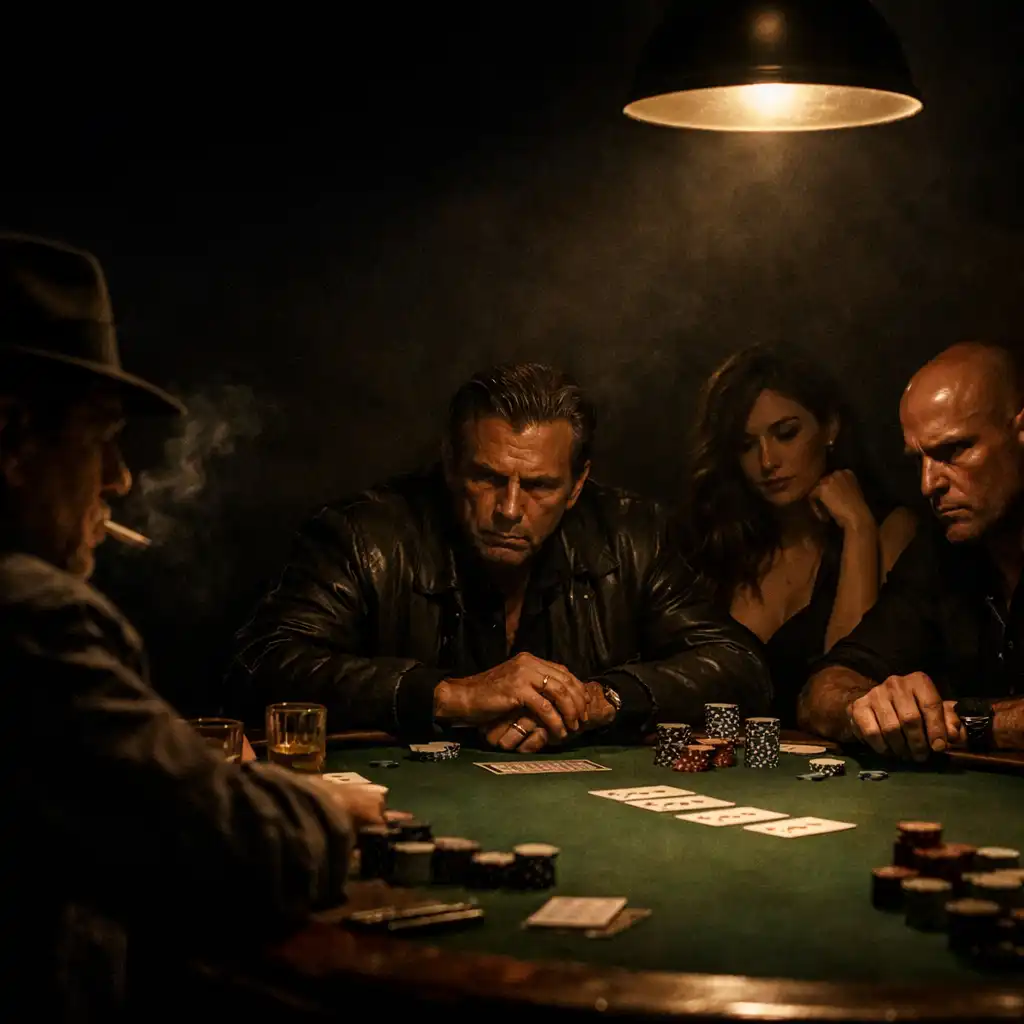
Intense players around a high-stakes poker table under a single overhead lamp

Poker in Cinema

The Cinematic Power of Poker

Poker transforms a card game into a crucible of character, where every bet reveals a hidden truth. From smoky backrooms to glittering casino floors, the game compresses tension, psychology, and risk into a single table.

The Appeal

Why Poker Works on Screen

The Mechanics of Suspense

Poker's structure—betting rounds, hidden cards, and showdowns—creates natural suspense that filmmakers can exploit. Each round raises the stakes, both financially and emotionally, while the hidden information in the hole cards aligns the audience with certain characters and creates dramatic irony. The final reveal of cards provides a built-in climax, turning a quiet table into a pressure cooker where every glance and hesitation matters.
Character Revelation Through Play

How a character plays poker—aggressively, cautiously, or deceptively—reveals their personality and moral compass. A bluff can symbolise a willingness to deceive, while a conservative player may reflect fear or discipline. The decision to go all-in often marks a turning point in the character's arc, making the poker table a stage for internal conflict and personal transformation.

Poker as a Social Microcosm

The poker table brings together diverse characters, forcing interactions that reveal social dynamics and power struggles. It is a confined space where class, ambition, and morality collide. Poker games often serve as a neutral ground for characters from different worlds, and while the game's rules create a level playing field, skill and luck introduce inequality that drives the drama forward.

Scene Studies

Iconic Poker Scenes in Film

Three hands that changed how audiences see the game.

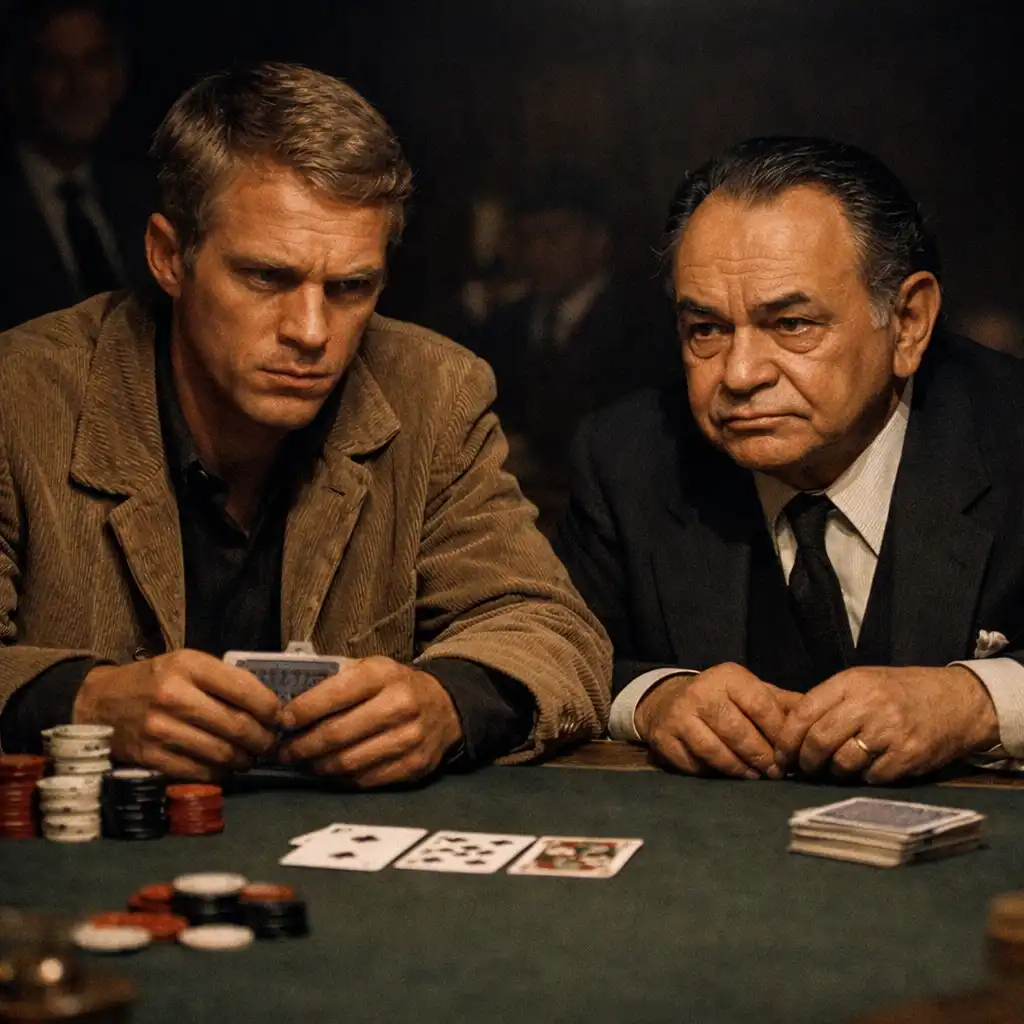
Steve McQueen and Edward G. Robinson face off in the final hand of The Cincinnati Kid

The Cincinnati Kid (1965) — The Final Hand

The climactic showdown between Eric 'The Kid' Stoner and Lancey Howard is a masterclass in building tension through close-ups and editing. The scene uses extreme close-ups of cards and faces to heighten suspense, and the final card reveal subverts expectations, emphasising the role of luck. Steve McQueen's restrained performance contrasts with Edward G. Robinson's quiet confidence, turning a simple card game into a duel of wills.

The Cincinnati Kid (1965), directed by Norman Jewison. Starring Steve McQueen and Edward G. Robinson.

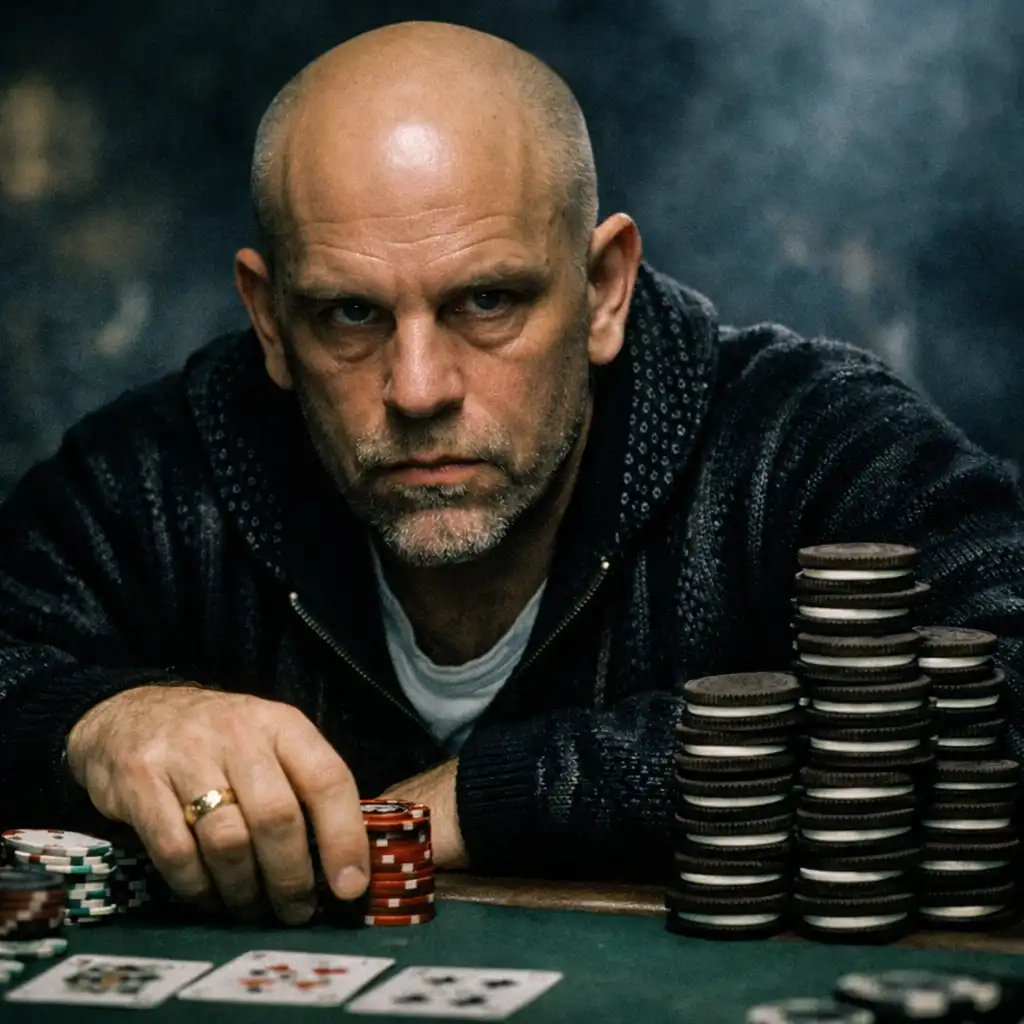
John Malkovich as Teddy KGB glares across the poker table in Rounders

Rounders (1998) — 'If You Can't Spot the Sucker'

The opening poker game and the final heads-up match against Teddy KGB showcase the film's authentic poker strategy and character-driven drama. The opening scene establishes Mike's skill and his fatal flaw: ego. The final match uses poker terminology and tells to build a battle of wits, while Matt Damon's narration guides the audience through the strategic thinking behind every raise and fold.

Rounders (1998), directed by John Dahl. Starring Matt Damon, Edward Norton, and John Malkovich.

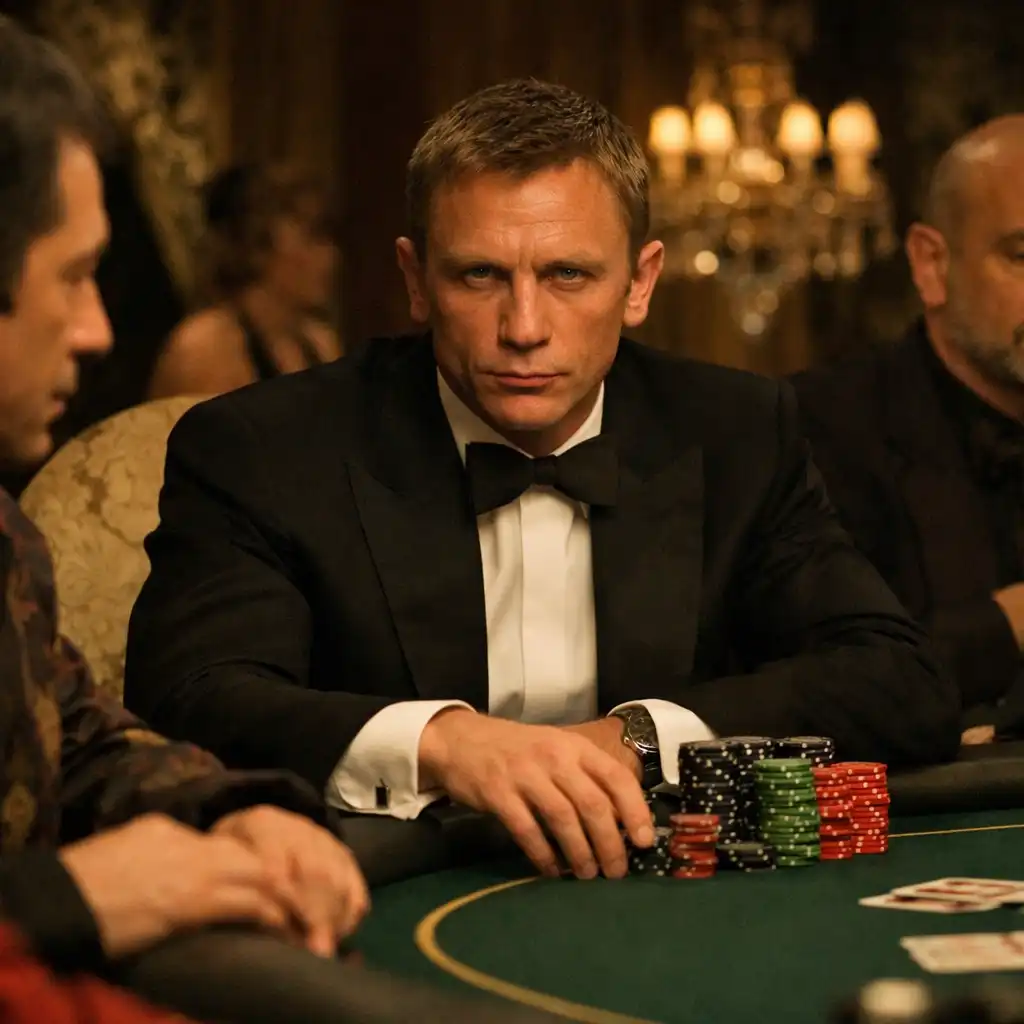
Daniel Craig as James Bond studies his opponents during the Casino Royale poker tournament

Casino Royale (2006) — The High-Stakes Tournament

The poker tournament at Casino Royale reimagines the game as a battle of wills between Bond and Le Chiffre, blending action with psychological tension. The scene uses poker as a metaphor for the spy game: deception, risk, and reading opponents. Daniel Craig's Bond is more vulnerable, making the stakes personal, and the film's poker consultant ensured accurate play, adding authenticity for poker-savvy audiences.

Casino Royale (2006), directed by Martin Campbell. Starring Daniel Craig and Mads Mikkelsen.

Character Studies

Poker Character Archetypes

Recurring figures who keep returning to the table.

Portrait of a young, intense poker player representing the Prodigy archetype

The Prodigy

A young, naturally gifted player who must learn discipline and humility. Often the protagonist, the Prodigy represents raw talent and the promise of greatness. Examples include Mike McDermott in Rounders and Eric Stoner in The Cincinnati Kid. Their journey often involves a fall from grace and eventual redemption, making them the emotional heart of the story.

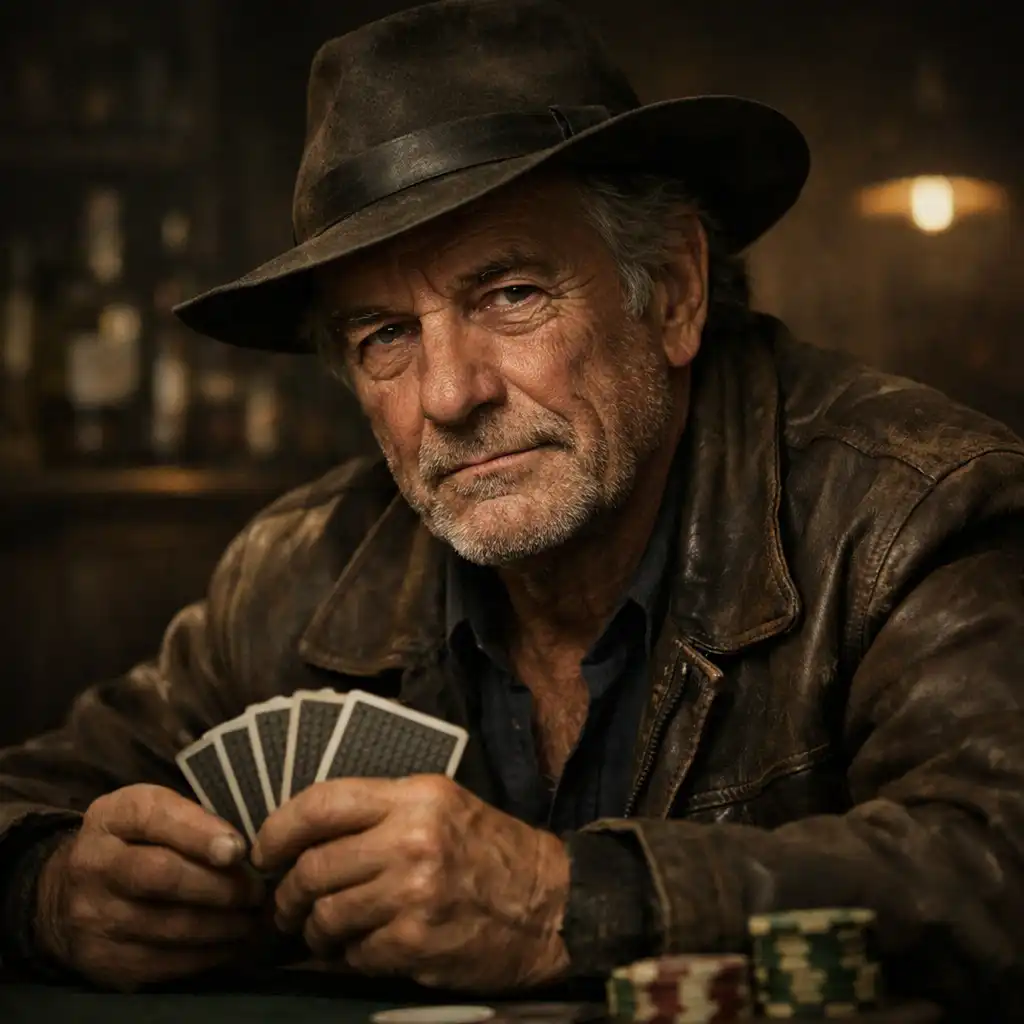
Portrait of an older, weathered poker player representing the Veteran archetype

The Veteran

An experienced, often world-weary player who serves as a mentor or rival. The Veteran embodies wisdom and the harsh lessons of the game. Examples include Lancey Howard in The Cincinnati Kid and Johnny Chan's cameo in Rounders. They may be tragic figures or respected adversaries, carrying the weight of every hand they have ever played.

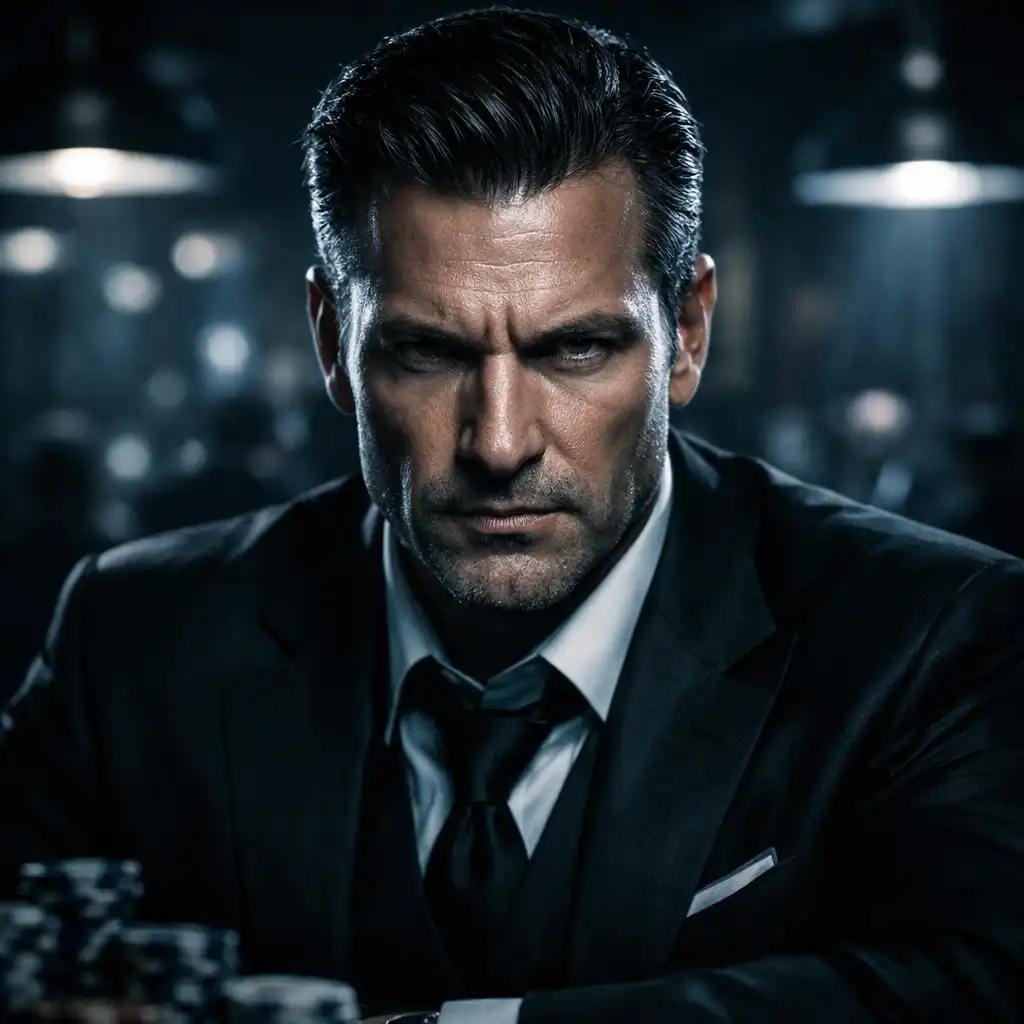
Portrait of a ruthless, intimidating poker player representing the Shark archetype

The Shark

A ruthless, often villainous player who uses intimidation and deception. The Shark represents the dark side of poker: greed and manipulation. Examples include Teddy KGB in Rounders and Le Chiffre in Casino Royale. Their defeat often symbolises the triumph of integrity over corruption, giving the audience a satisfying moral resolution.

Behind the Scenes

The Craft of Filming Poker

Camera Work and Editing

Directors use close-ups, reaction shots, and rhythmic editing to put the audience at the table. Close-ups on cards and faces create intimacy and suspense, while reaction shots reveal characters' tells and emotions. The editing pace often mirrors the betting rhythm, accelerating during showdowns to make the final reveal feel inevitable and earned.

The camera has to feel like another player, watching every twitch and waiting for the truth to slip out.

Sound Design and Music

The clink of chips, the shuffle of cards, and a tense score amplify the stakes. Foley artists create realistic chip and card sounds, while music often drops out during critical hands to focus on dialogue and sound effects. Silence can be as powerful as a dramatic score, letting the audience hear the weight of every decision.

Authenticity and Consultation

Many productions hire poker consultants to ensure accurate play and terminology. Consultants teach actors how to handle cards and chips convincingly, and accurate play adds credibility for poker-savvy audiences. Some films use real poker professionals as extras or advisors, grounding the drama in the game's real rhythms.

Thematic Analysis

Poker as Metaphor

Fate vs. Free Will

Poker scenes often dramatise the tension between luck and skill, mirroring characters' struggles with destiny. A lucky draw can represent fate intervening, while a skilled player's loss may suggest the limits of control. The game's outcome often reflects the character's moral choices, turning the table into a philosophical arena where chance and intention collide.

Risk and Consequence

Going all-in is a metaphor for commitment and the willingness to face consequences. The all-in moment often parallels a character's major life decision, and losing everything can symbolise a fall from grace or a necessary sacrifice. Winning against the odds can represent redemption or triumph, making the poker hand a compressed version of the character's entire journey.

Every all-in is a confession: this is who I am, and I am willing to lose everything to prove it.

Watchlist

Essential Poker Films to Watch

Five films that capture the game's drama, strategy, and soul.

  1. The Cincinnati Kid (1965)

    Classic showdown drama built around one unforgettable final hand, with Steve McQueen and Edward G. Robinson turning a card game into a battle of generations.

  2. Rounders (1998)

    Modern poker strategy and character study that treats the game with rare authenticity, following a talented player's struggle to balance skill, ego, and loyalty.

  3. Casino Royale (2006)

    High-stakes action and psychological tension, reimagining Bond as a vulnerable player whose poker face is tested by a ruthless opponent.

  4. Maverick (1994)

    A comedic take on poker and con artists, blending charm and trickery as Mel Gibson's gambler bluffs his way toward a high-stakes tournament.

  5. The Sting (1973)

    Not strictly a poker film, but its memorable poker game on a train captures the con-artist spirit and the thrill of a perfectly played hand.

Looking Ahead

The Future of Poker in Cinema

Evolving Narratives

As poker's popularity evolves, filmmakers may explore new angles such as online poker, AI opponents, and the psychological toll of professional play. Online poker introduces themes of anonymity and digital deception, while AI opponents raise questions about skill versus technology. The mental health struggles of professional players could be a rich subject, moving the drama beyond the table and into the player's mind.

Technological Innovations

Advances in filmmaking technology, such as virtual production and immersive sound, could make poker scenes even more visceral. Virtual sets could recreate famous poker rooms, while immersive audio could put viewers inside the player's head. Interactive storytelling might allow audiences to make poker decisions, turning spectators into participants and deepening the emotional stakes.

Conclusion

The Enduring Appeal

Poker endures in film because it distills human drama into a single table: ambition, fear, deception, and the eternal hope of a winning hand. The game's simplicity allows for endless narrative variation, and its psychological depth provides rich material for character development. As long as audiences are fascinated by risk and reward, poker will remain a cinematic staple.

Every hand is a story, and every player is waiting for the moment the cards finally tell the truth.